CHILD TAX CREDIT OUTREACH
NEW: CHILD TAX CREDIT PROMOTIONAL VIDEOS FROM NCAP!
NCAP is thrilled to share with the Community Action Network two new videos every agency can use to help people understand the Child Tax Credit (CTC) and how to get their refund. These videos can be shared on social media, websites, at meetings with community partners and wherever parents may gather.
- File Your Taxes to Get Your Child Tax Credit — This one-minute animated video explains what the CTC is and that the only way to get the credit is to file taxes. It also tells how to find free tax filing sites.
- Three Mothers Share About the Child Tax Credit and How It Has Helped Their Families — This two-minute video features three mothers who share why it is so important to file your taxes to get your refund and how the CTC has improved their lives.
NEW: PROVIDING EQUITABLE ACCESS TO THE EXPANDED CHILD TAX CREDIT
The expanded Child Tax Credit for 2021 is still available to families who file taxes and for those who haven’t filed taxes in the past. Join us to hear about how CAAs can help families get all the available tax credit due to them including the remainder of their CTC. The National community Action Partnership will be providing a wide range of new resources on tax filing, including social media templates, new videos, upcoming office hours with experts, and details on how families can find free tax prep sites in their communities.
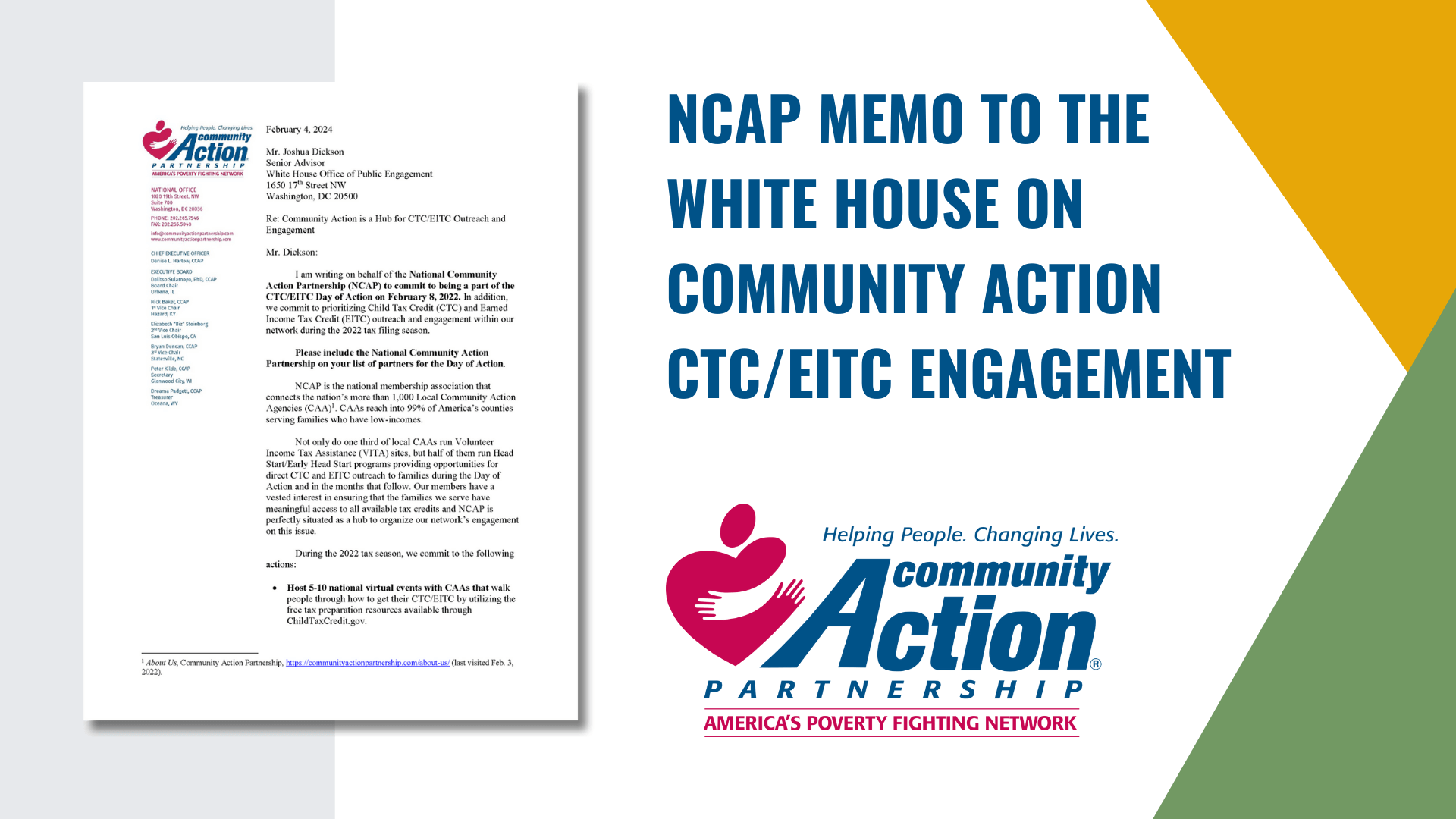
NEW: NCAP MEMO TO THE WHITE HOUSE ON COMMUNITY ACTION CTC/EITC ENGAGEMENT
NEW: BILINGUAL EDUCATIONAL FLYERS
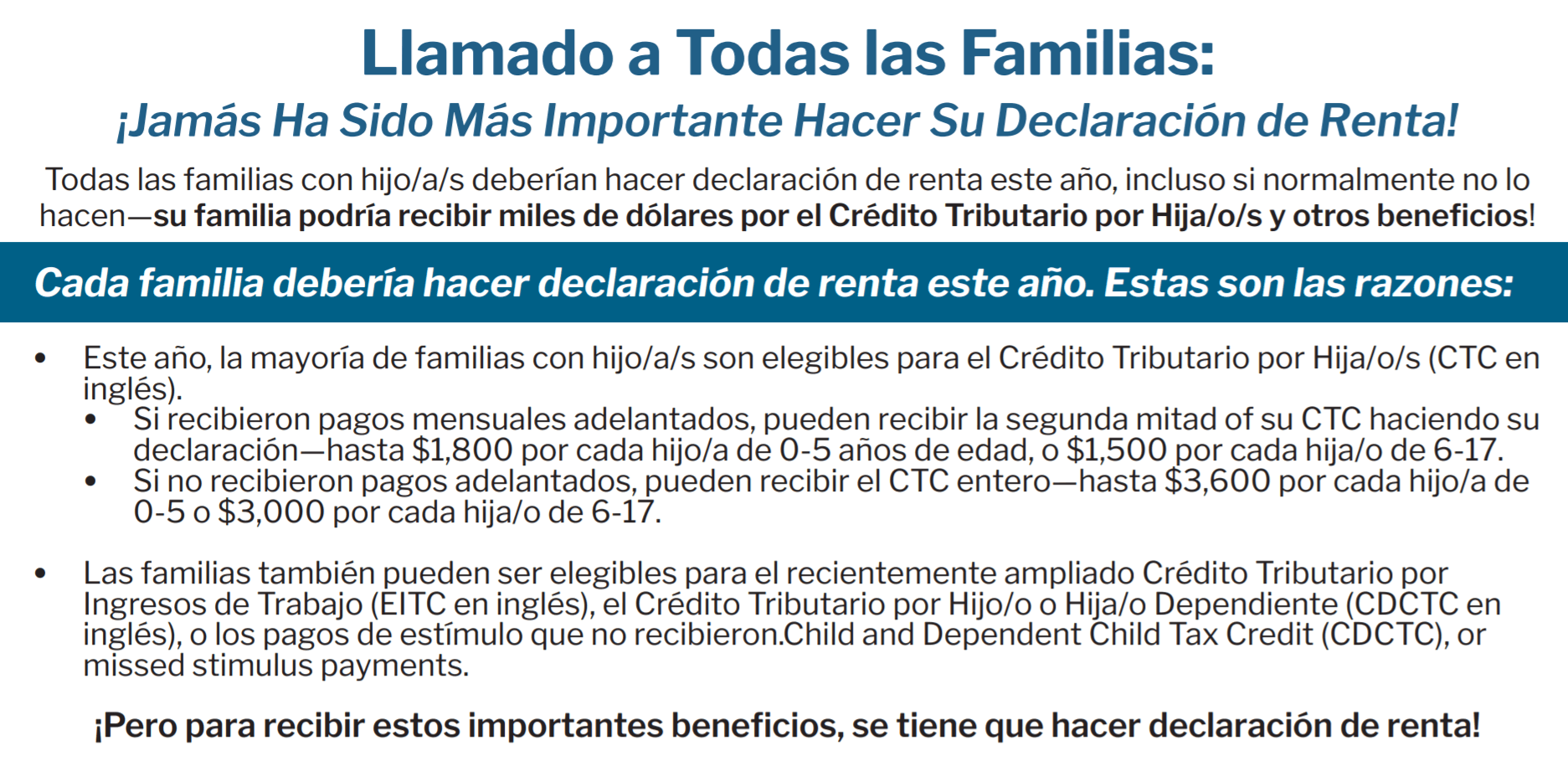
New one-page flyers from the Center for the Study of Social Policy, available in both English and Spanish, can help your Agency spread the word about how to claim the Child Tax Credit.
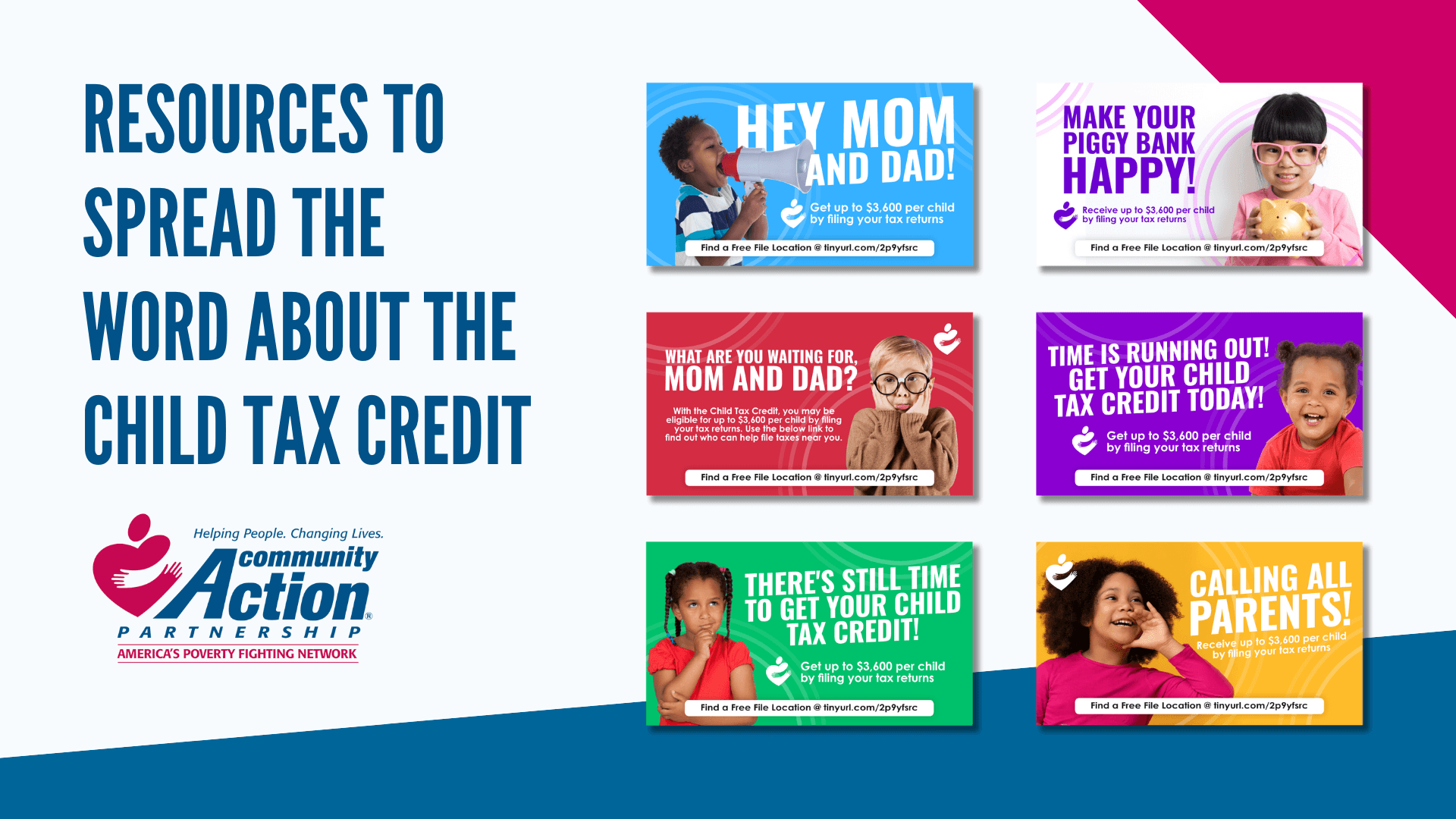
NEW: RESOURCES TO SPREAD THE WORD ABOUT THE CHILD TAX CREDIT
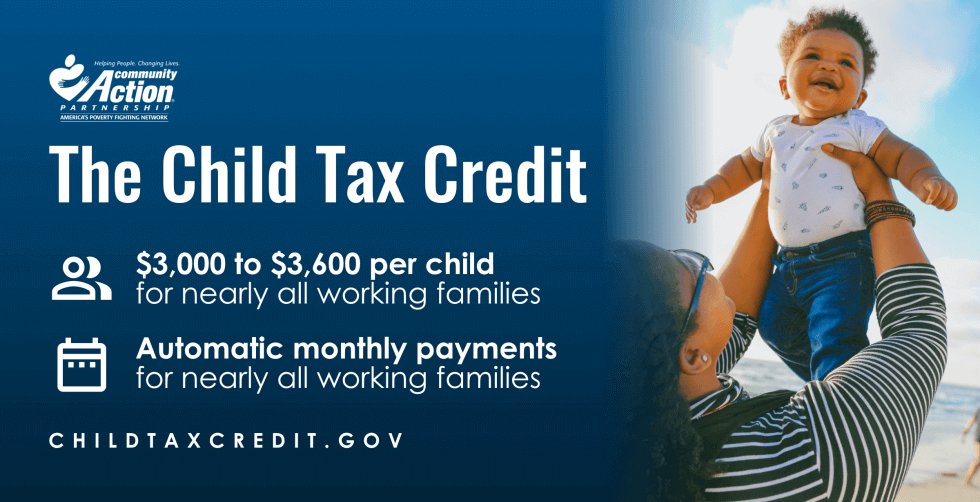
It’s not too late for families to take advantage of up to $3,600 per child afforded by the Child Tax Credit – all they need to do is file their 2021 taxes. These new social media graphics from NCAP can help your agency spread the word about this important benefit and help parents get their money.
NEW: RESEARCH ROUNDUP OF THE EXPANDED CHILD TAX CREDIT: THE FIRST SIX MONTHS
Since the introduction of the first monthly Child Tax Credit payment in July 2021, a continuous stream of research has emerged tracking the impact of this new policy on the lives of children and their families. This roundup compiles the range of publicly available information on what we know so far about who has received it, how families are using it, and how families have fared since the monthly payments began.
NEW: WHAT FAMLIES NEED TO KNOW ABOUT THE CHILD TAX CREDIT IN 2022
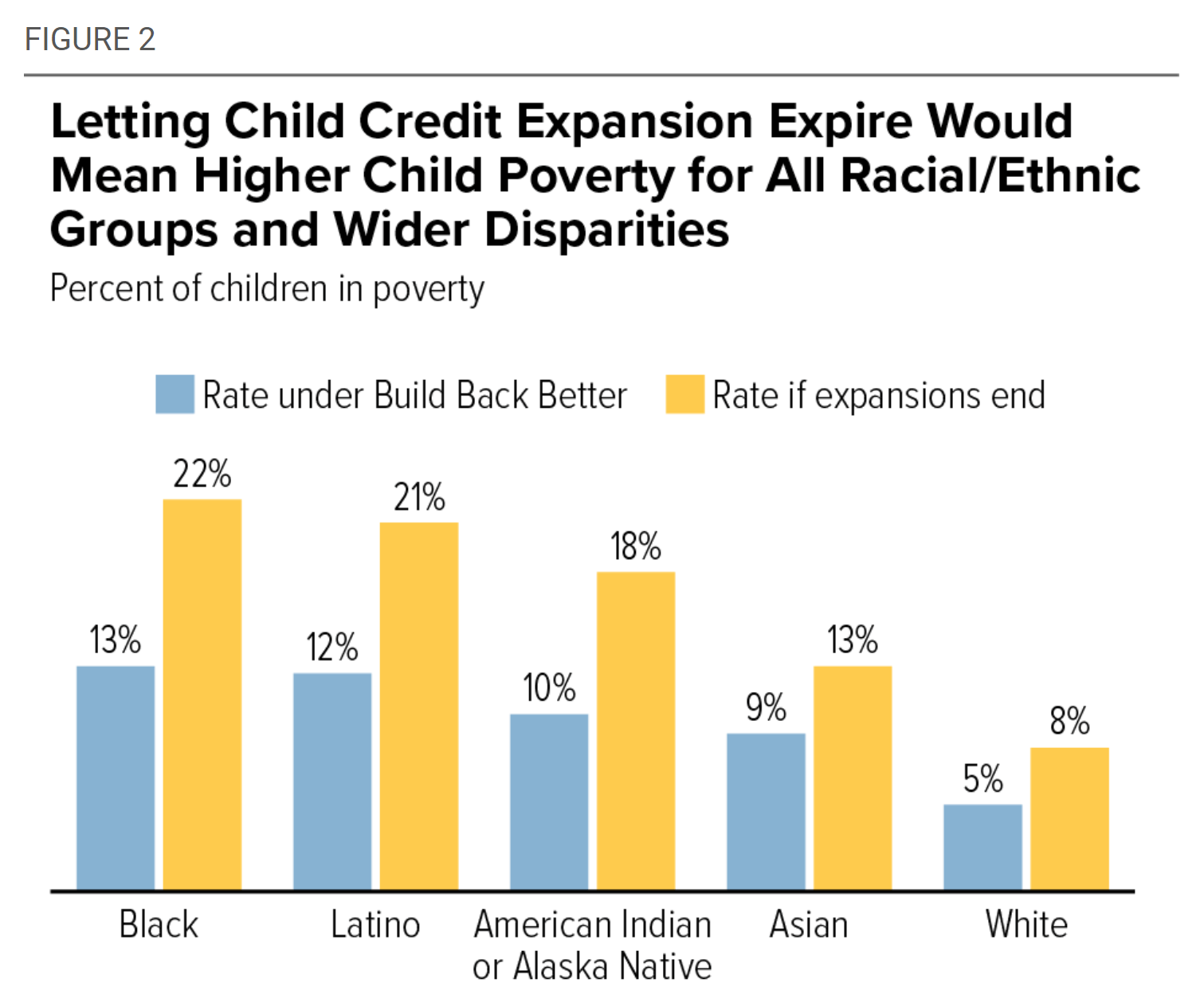
The temporary expansions to the Child Tax Credit (CTC) have dramatically reduced the share of children experiencing poverty, especially for Black and Latinx kids. The expansions have also lowered food insecurity rates, helped families afford necessities, and reduced financial stress for parents. But since the monthly CTC payments have ended—at least for now—many are left feeling uncertain.
NEW: IF CONGRESS FAILS TO ACT, MONTHLY CHILD TAX CREDITS WILL STOP, CHILD POVERTY REDUCTIONS WILL BE LOST
If Congress fails to act, monthly Child Tax Credit payments will not be made on January 15, and many families will struggle to make ends meet.
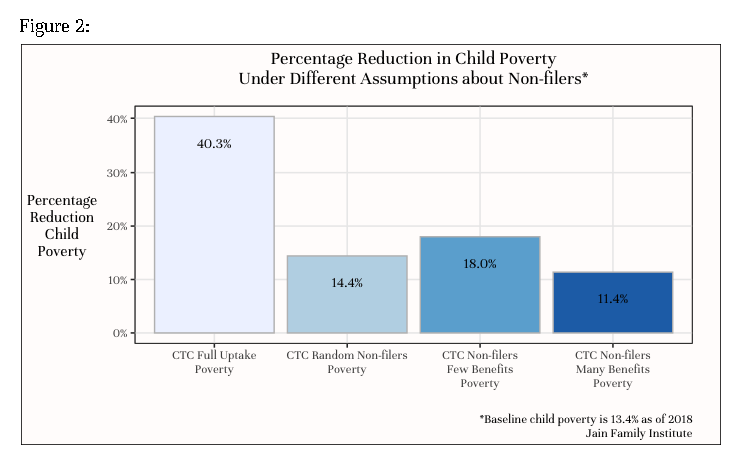
ASSESSING NON-FILER RATES AND POVERTY IMPACTS FOR THE AMERICAN RESCUE PLAN’S EXPANDED CTC
This brief presents results from a series of microsimulations that calculate the estimated poverty impacts of the expanded CTC under different assumptions about which children are in non-filing households.
BENEFIT RESOURCE GUIDE
Use this new interactive flyer from NCAP to access outreach and program resources for recent benefits like the Child Tax Credit (CTC), the Emergency Broadband Benefit (EBB), and benefits in the American Rescue Plan (ARP). Click on any of the resources featured in the .PDF document to access them instantly.

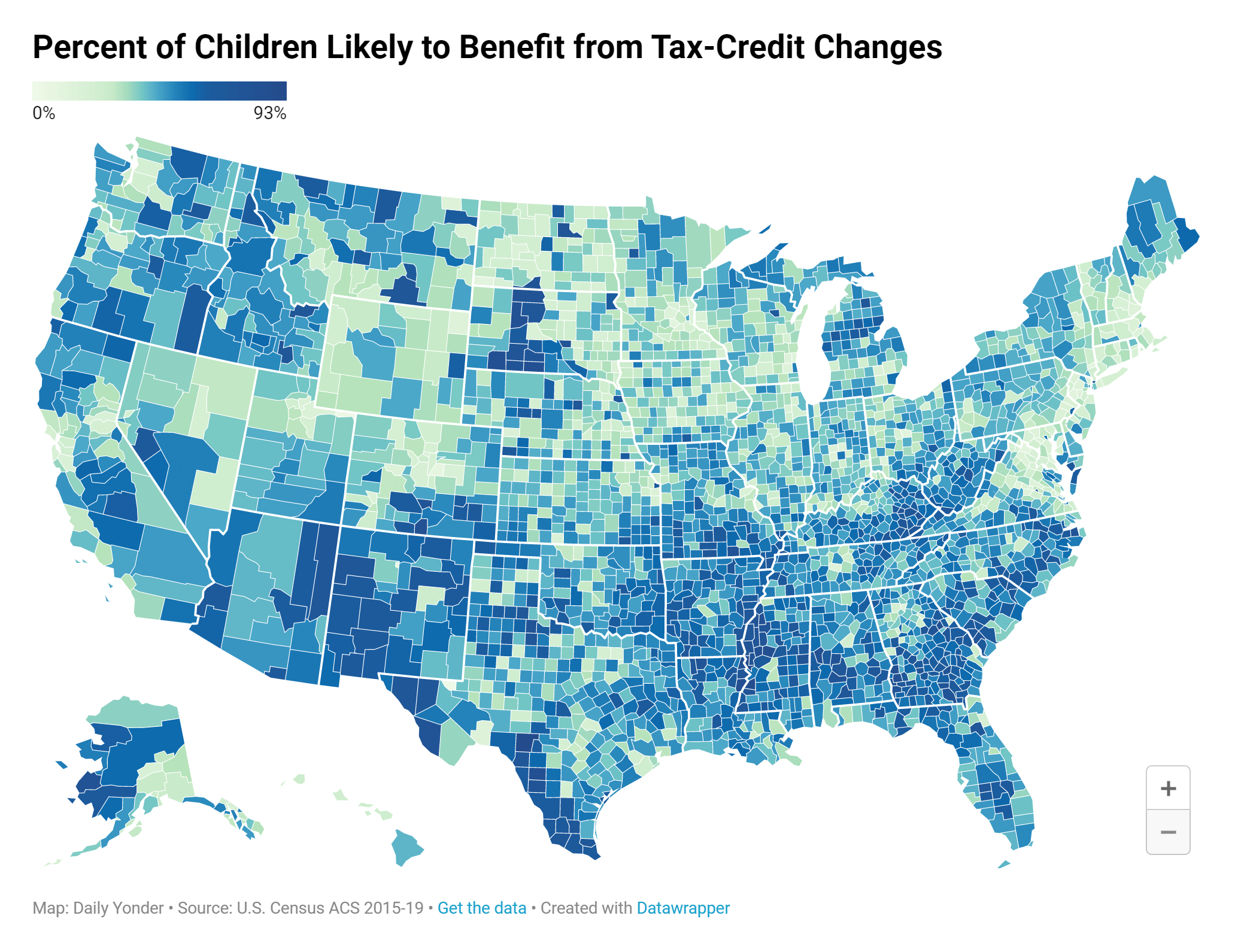
CHANGES IN CHILD TAX CREDIT HAVE BIGGER IMPACT ON RURAL FAMILIES
An analysis of Census data shows that about 49% of rural children were likely to have received increased child tax credits because of changes affecting low-income families. In metropolitan areas, about 39% of children were likely to have benefited from those changes. See below for more.
CHILD TAX CREDIT AWARENESS DAY WEBINAR
The Partnership hosted a Child Tax Credit Awareness Day webinar presentation alongside OCS Director, Dr. Lanikque Howard, and OHS Director, Dr. Bernadine Futrell. Access presentation slides and resources below.
CHILD TAX CREDIT — PROMOTIONAL GRAPHICS
NCAP is excited to spread the word about the new Child Tax Credit, and we’ve created a few resources to help you do the same! Below, find social media graphics from NCAP and other resources from the White House and the IRS.
CHILD TAX CREDIT OUTREACH MATERIALS
This resource site is designed to help you and your organization reach out and help families claim their child tax credit if they have not automatically received their payments from the IRS.

GET IT BACK TOOLKIT: CHILD TAX CREDIT
Here is a Social Media Toolkit that we can use to make this easy. Share the social posts in this toolkit to your Facebook, Twitter, and Instagram to help families access and get the Child Tax Credit to support them with the high cost of raising children. Partner Social Media Toolkit # 3 found on page 17 has the best tools for us to use now as it focuses on the urgency for families to sign up to get their CTC and maybe their stimulus checks as well.

HELPING ALL ELIGIBLE FAMILIES GET THE CHILD TAX CREDIT
NCAP is honored to have the Center of Budget and Policy Priorities (CBPP) join us in our 30 day push to get families enrolled in the Advanced Child Tax Credit. The 2021 Child Tax Credit expansion provides a historic opportunity to reduce child poverty in the United States by more than 40 percent! Non-filer families can submit their info to the IRS through November 15. Your efforts to help people get advance CTC payments are essential. Join this session to learn what’s new with the Child Tax Credit and how families can get it with special focus on the non-filers. Find out answers to common questions and resources to support people who need more assistance.
HOW INCREASING THE FEDERAL EITC AND CTC COULD AFFECT TAXES
The American Rescue Plan (ARP) Act of 2021 increased the federal earned income tax credit (EITC) and child tax credit (CTC). In turn, 28 states and the District of Columbia will see increases in their state EITCs because of existing linkages between federal and state tax codes. We estimate that 4.6 million households will see an average state EITC increase of $153. One state, Oklahoma, will have an automatic increase in their state CTC of about $100 for about 300,0000 households. In about 1 million households, state taxes will increase by an average of $153, much smaller than the average federal tax cut for these households ($2,700).

SAMPLE TWEETS FROM THE IRS
The IRS has provided the following sample tweets to help get the word out about September Child Tax Credit payments:
- Families are now receiving September #ChildTaxCredit payments. Learn more from #IRS at https://go.usa.gov/xMZkX
- Millions of Americans are receiving monthly #ChildTaxCredit payments. Families can stop payments anytime, even after payments begin. To learn more from #IRS, see: https://go.usa.gov/xMZkX
- Qualified families who didn’t get July or August #ChildTaxCredit payments and are getting their 1st payment now will get advance payments over 4 months. Learn more from #IRS at https://go.usa.gov/xMZkX
- Families are now receiving a 3rd batch of #ChildTaxCredit payments. Remember: For families not required to file, the #IRS Non-filer Sign-up Tool remains available until Oct. 15 as an easy way to register for payments. See: https://go.usa.gov/xMZkX

STATE FACT SHEETS: HOW ARE FAMILIES USING THE CHILD TAX CREDIT
To demonstrate the immediate impact of the child tax payments, the Casey Foundation recently partnered with the Social Policy Institute at Washington University to develop easy-to-read fact sheets that include data from the U.S. Census Bureau’s Household Pulse Survey. These fact sheets show how families making less than $150,000 a year are using the credit and what kind of a difference it is making in their lives.

THREE-MINUTE TUTORIAL: CUSTOMIZE NCAP PROMO MATERIALS WITH YOUR AGENCY’S LOGO
In this quick video, learn how you can customize NCAP documents with your Agency’s own logo using free software.
WHERE ARE FAMILIES MOST AT RISK OF MISSING OUT ON THE CHILD TAX CREDIT?
The American Rescue Plan Act significantly expanded the child tax credit (CTC) for 2021, but according to the Treasury Department, as many as 2.3 million children might miss out on benefits because their families did not file income taxes in 2019 or 2020. Many of these families earned too little to file a tax return and thus have the most to gain from the expanded CTC. This tool maps where children in these families are most likely to live, which can help inform policymakers and community advocates working to connect eligible families to needed benefits.

ZIP CODE DATA FOR CTC-ELIGIBLE CHILDREN IN NON-FILER HOUSEHOLDS
This table shows, by ZIP Code, the number of children who may be eligible to be claimed for the expanded and newly-advanceable Child Tax Credit from the American Rescue Plan but who had not been claimed on a recent tax return.